
Portrait photography is both a technical discipline and a deeply human art. A portrait’s power lies not only in the subject’s expression but in how light sculpts the face, defines the mood, and directs the viewer’s attention. Mastering portrait lighting is essential for any photographer who wishes to create images of lasting impact.
The Five Classic Portrait Lighting Setups
1. Rembrandt Lighting
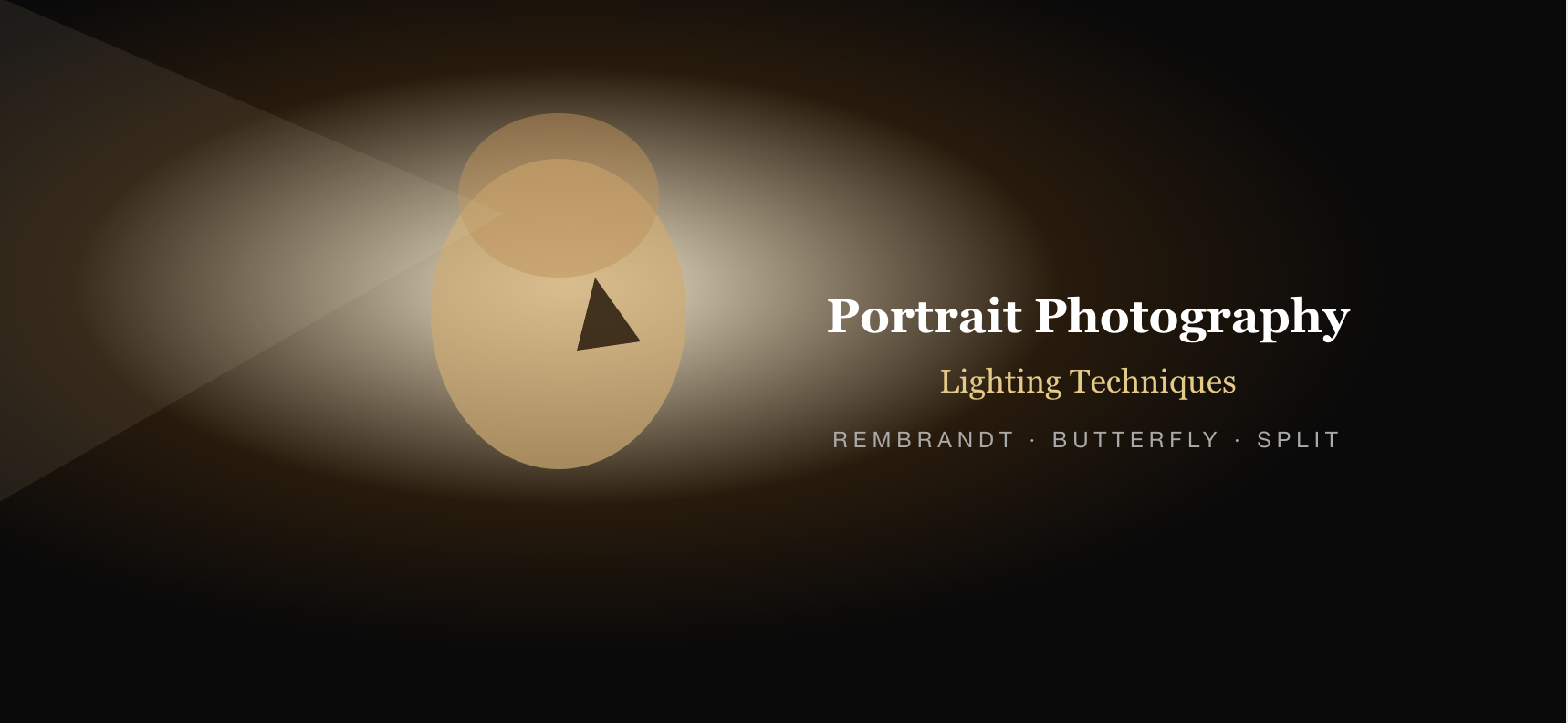
Named after the Dutch master painter, Rembrandt lighting is characterised by a small triangle of light on the shadowed cheek. The key light is placed at approximately 45 degrees to the side and above the subject’s face. It creates depth, drama, and a timeless quality suited to formal and artistic portraits.
2. Butterfly Lighting
Place the key light directly in front of and above the subject, angled downward. This creates a butterfly-shaped shadow beneath the nose — hence the name. It is flattering for high-cheekbone faces and is a favourite in fashion and glamour photography.
3. Split Lighting
The key light is placed directly to one side of the subject, illuminating exactly half the face while leaving the other in shadow. The result is bold, graphic, and highly dramatic — powerful for editorial and conceptual portraits.
4. Loop Lighting
The most common portrait lighting setup, loop lighting involves positioning the key light slightly to the side and above the eye level, creating a small, downward-looping shadow from the nose. It is universally flattering and natural-looking.
5. Broad vs. Short Lighting
These are not separate setups but orientations. Broad lighting illuminates the side of the face turned toward the camera, widening the face. Short lighting illuminates the side turned away, slimming the face. Understanding this distinction allows you to flatter different face shapes.
Working with Natural Light
A large window acts as a superb soft box. Position your subject at a 45-degree angle to the window for a beautiful, directional natural light. Use a white reflector or foam board on the opposite side to bounce light back and reduce the shadow ratio.
“Light makes photography. Embrace light. Admire it. Love it. But above all, know light.” — George Eastman
Conclusion
Begin with one light source — whether natural or artificial — and master its behaviour before adding complexity. The most compelling portraits in history have been made with a single, well-considered light. Technique serves the subject; never let it overshadow them.