
Among the many principles that define professional photography, few are as universally applicable — or as transformative — as the Rule of Thirds. Whether you are a beginner picking up your first camera or a seasoned professional refining your craft, a thorough understanding of this compositional guideline will elevate the visual impact of your photographs significantly.
What Is the Rule of Thirds?
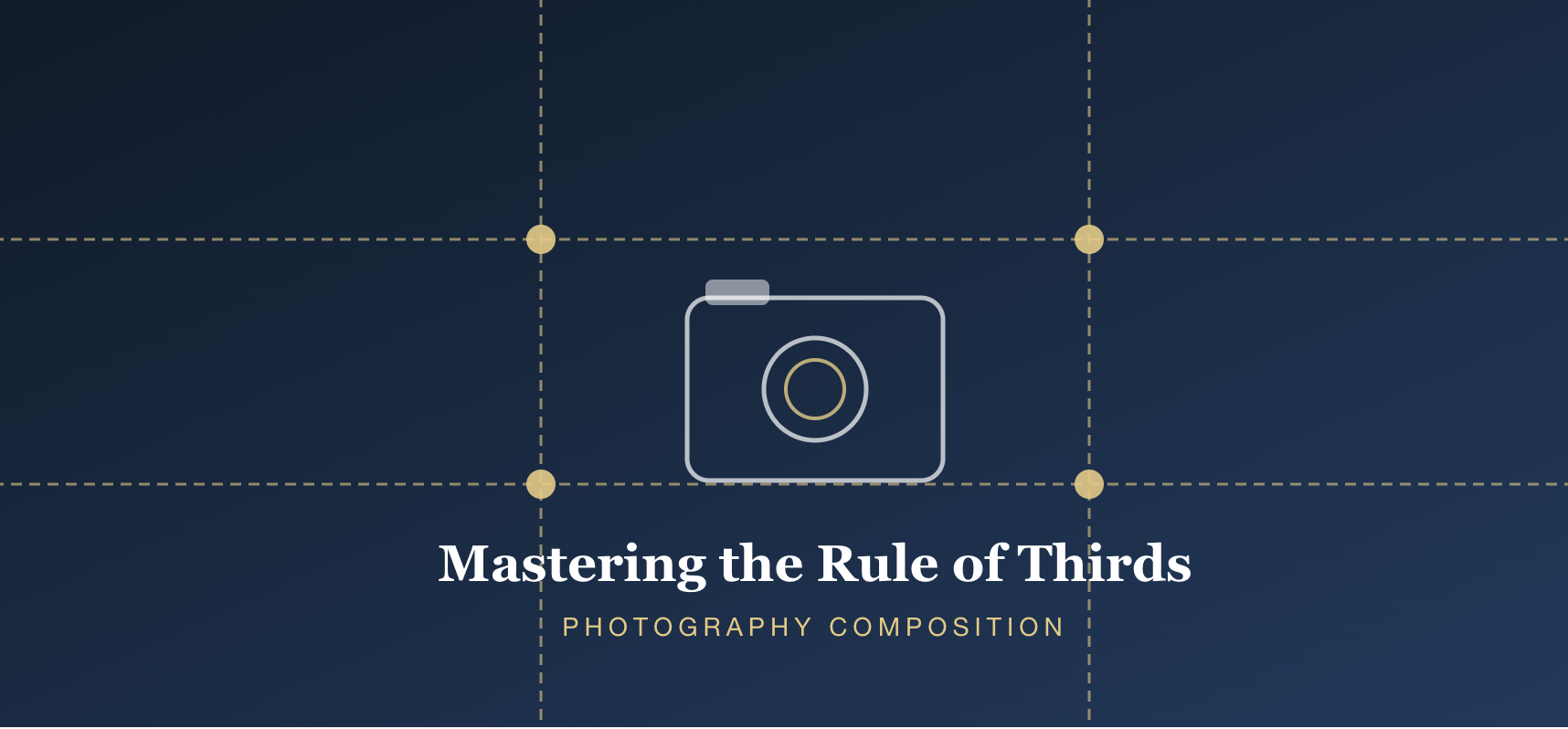
The Rule of Thirds divides an image into nine equal parts using two evenly spaced horizontal lines and two evenly spaced vertical lines. The premise is straightforward: the most visually compelling subjects should be placed along these lines, or at the four intersection points — often referred to as power points or crash points.
This approach creates a sense of natural balance and visual tension that a centrally composed image often lacks. It is a principle borrowed from classical painting and adapted seamlessly into modern photography.
Why It Works: The Psychology Behind the Grid
Human vision is not drawn to the centre of an image instinctively. Studies in visual perception suggest that the eye naturally travels to the points of intersection first, before exploring the rest of the frame. By aligning your subject with these points, you guide the viewer’s gaze intentionally, creating a more dynamic and engaging photograph.
“The camera sees more than the eye, so why not make use of it?” — Edward Weston
Practical Application: How to Compose Using the Rule of Thirds
- Activate the grid overlay on your camera or smartphone. Most modern cameras offer a built-in grid option in the viewfinder or live view settings.
- Place your horizon on the upper or lower horizontal line, not in the middle of the frame. For expansive skies, use the lower line; for dramatic foregrounds, use the upper.
- Position your primary subject — a person’s eyes in a portrait, or a lone tree in a landscape — at one of the four intersection points.
- Allow natural space in the direction your subject is facing or moving. This is referred to as “lead room” and reinforces a sense of narrative.
When to Break the Rule
Rules in art exist to be understood before they are broken. Centred compositions work powerfully for symmetry — think of a cathedral’s reflection in still water, or a portrait intended to convey confrontation or authority. The key is intentionality: break the rule with purpose, not by accident.
Conclusion
The Rule of Thirds is not a constraint — it is a tool. Once it becomes second nature, you will begin to see every frame as a canvas divided into zones of possibility. Practice it consciously, apply it consistently, and over time, compelling composition will become intuitive.